The Cat in Cassis

Things have a way of coming together when we are in our element. Time is elastic and we travel in the past and future while reveling in the present. Things unsettle, settle, shift, and expand. Reclamation, reconnection, and resurrection. A vision of the future opens anew and trust in the goodness it holds rises. Have you ever lost your confidence without realizing it? Walked around apparently dribbling it until a good friend asks where it went and you freeze at the truth of its disappearance? It has to be somewhere, you think, then trace the steps back holding your breath at the sights of erosion along the way. Seeing them enlightens even if it hurts.

What am I trying to say? that beautiful days along the Mediterranean swimming and floating in the sea, reading a book, reflecting, jotting, drawing, watching others’ pleasure, eating and sleeping well, exploring the coast line, and being visited by a cat can stitch shredded stories into a new one with threads of confidence. Probably for anyone, beautiful days doing what you love in places you love can do that.

An uninvited white cat came into my life along a river in the center of France thirty-some years ago and stayed nearby for almost two. Coming to the bedroom to wake me in the morning, accompanying me to the mailbox, through the garden on daily flower checks, then curling up nearby on the table as I wrote. I fell in love with him while I resented having been gifted the responsibility–he was a present to my lover, who eventually became my husband, from his son. I encouraged the cat’s freedom and his jauntiness. I fed him and caressed him. A neighbor who once shot and injured him finally succeeded in killing him. (A man whose father killed cats and whose mother was then killed by a cat’s scratch on her ankle.) I learned about the sight of the beloved white cat’s bloated corpse some weeks after returning from my honeymoon when my husband finally told me he had found his body floating in the river on our wedding day and had spared me that news. That loss was a bigger blow than I anticipated. Soon after, I became pregnant. As soon as our son could play with things, he played with the stopper and chain of the bathtub, just as that cat loved to. I told myself he was back. Our son never liked hearing that. yet he, too, became a writing companion, in his way, napping nearby as I wrote, accompanying me on garden tours, waking me in the morning, and always over time encouraging my writing.

I eventually left the marriage. A lot of confidence eroded during those years without my realizing it. And there was a lot of France in those years, too. After loving it, I disliked it intensely for a while – but that was more about people and systems than the place. Alone with the nature of it, I felt high. I wondered if I could come back. If I could be comfortable here.

When I arrived in Cassis recently, I went to Préambule, hailed as the last bookstore before the sea. A paperback seemed to jump into my hands – Frédéric Ploquin’s EPSTEIN, Les secrets de la filière française – a loose translation is The Secrets of the French Network – or it could also be the French Supply Chain, which is more appropriate to its contents. I turned it over and saw Jean-Luc Brunel’s name–the man I mentioned in an earlier post, “Lucy and the Epstein Files” – a man I spent some time with and wrote about and who received something else from me than what he wanted.

I bought the book and learned more about his life, arrest, imprisonment, and death. I saw within it the names of other French and American agents I had met (also fictionalized in Lucy, go see.,) and friends of Brunel, and Epstein I dined with in Paris, and throughout those pages I visited again the apartment and places where I and many others went with Brunel. I was struck by his honesty with me and his lies to the investigators. He was unaware I was investigating him in my own way. I’ve only thought recently about how that time with him turned me away from building a life in Paris I was imagining then, and once again away from the modeling world for a while. All those years he was hurting girls and women, and then, finally, at over 70 years of age being held accountable for it. It surprised me how long he lasted in jail, but not that his last attempt at taking his life was not his first. One could say that all that information was lost with him, yet had he lived, I doubt he would have divulged any of it. He lied on the stand until the end. I’m still thinking about the things I read, and about Daniel Siad, who also died young suddenly and recently, who also was part of that network/supply chain, and how it appears that no one other than Ghislaine Maxwell is being held accountable in the US. Even more than all this, as much as I would like to see all perpetrators brought to justice, I wonder how much trafficking is still going on while eyes are trained on the past.

What will it take to stop abuse?

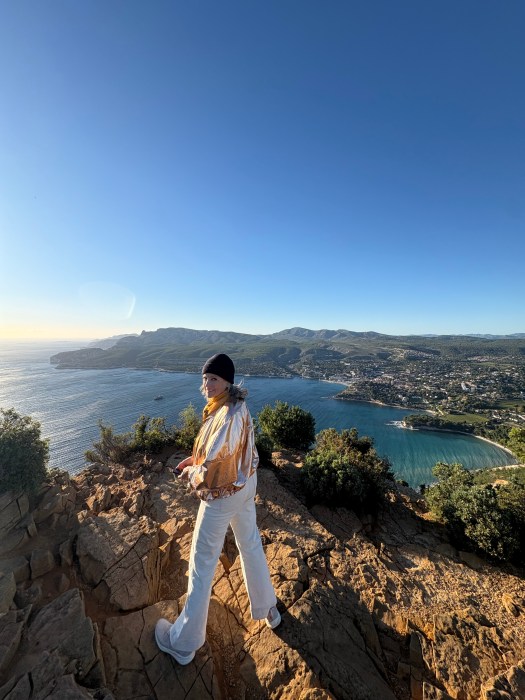
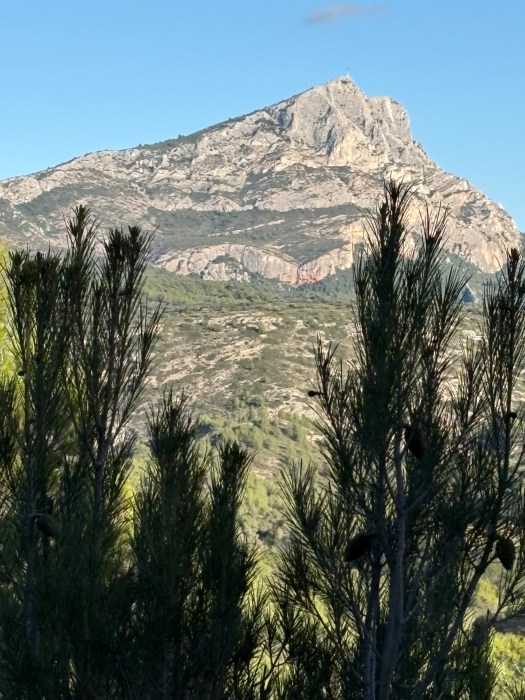
I thought about that in Cassis as I swam in the mornings, and floated and bobbed in the clear turquoise waters. I am sure it involves talking about it. I thought about Rilke’s mention that we pass information about sexuality along in an unopened envelope from generation to generation. I read during the hottest hours, looking out at the sea from the air-conditioned hotel room. In the evening I ate delicious fish and then I swam, floated, and bobbed again as the sun set, watching it highlight the terra cotta cliffs and the limestone 13th century chateau. I finished the book on the terrace using my phone for light while the full moon rose. Then I took a long bath and had a great sleep.

In the morning, I opened the terrace door to let in the sea air. As I snapped a few joyful selfies in bed, I felt a presence scurry by and turned and saw nothing. Some moments later, a white cat came purring, jumped into the bed, and pawed me, looking for caresses just as that beloved cat had done decades ago. He even looked like him. I caressed his neck, face, belly, and slithered his tail, and he curled into me and purred deeply. My body recalled the cat and life I loved, made, and left., as I remembered how the shedding hair annoys me. To feel again the breathing together resounded something unnameable and primitive in me. When I left to swim, the cat spread himself across the top step of the spiral staircase leading to the room, right at the gate, like a sentinel. And when I came back from another delicious frolic in the sea, he was still there. By the time, I left to check out, he was gone, without a farewell, and I was okay with that.

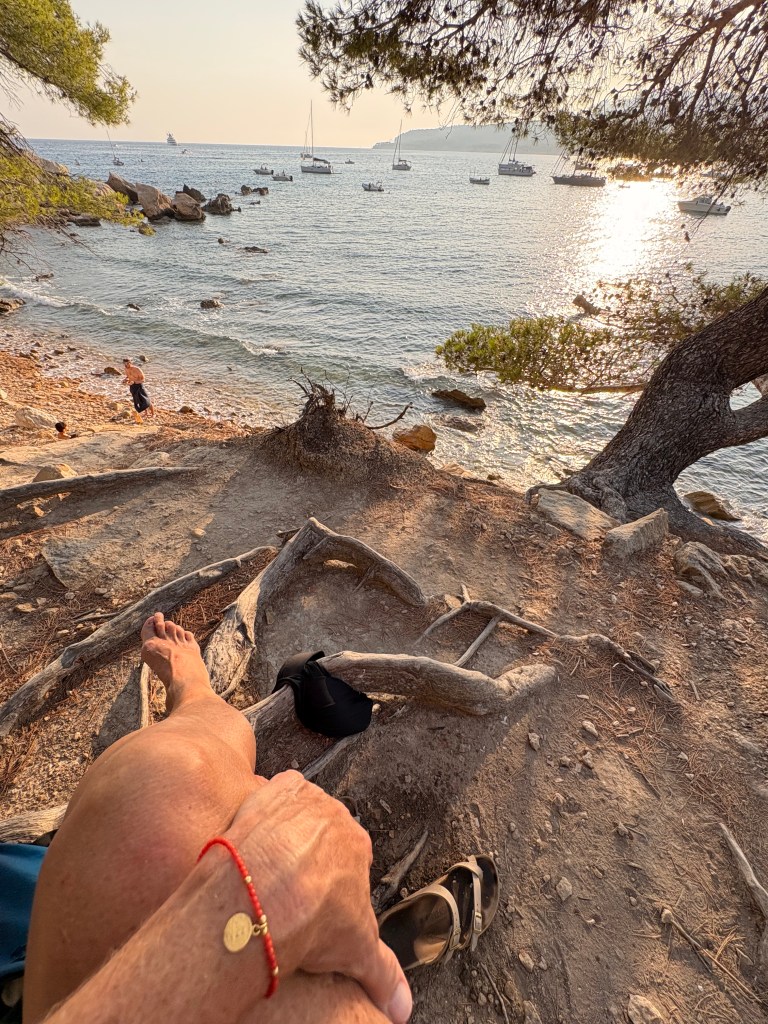
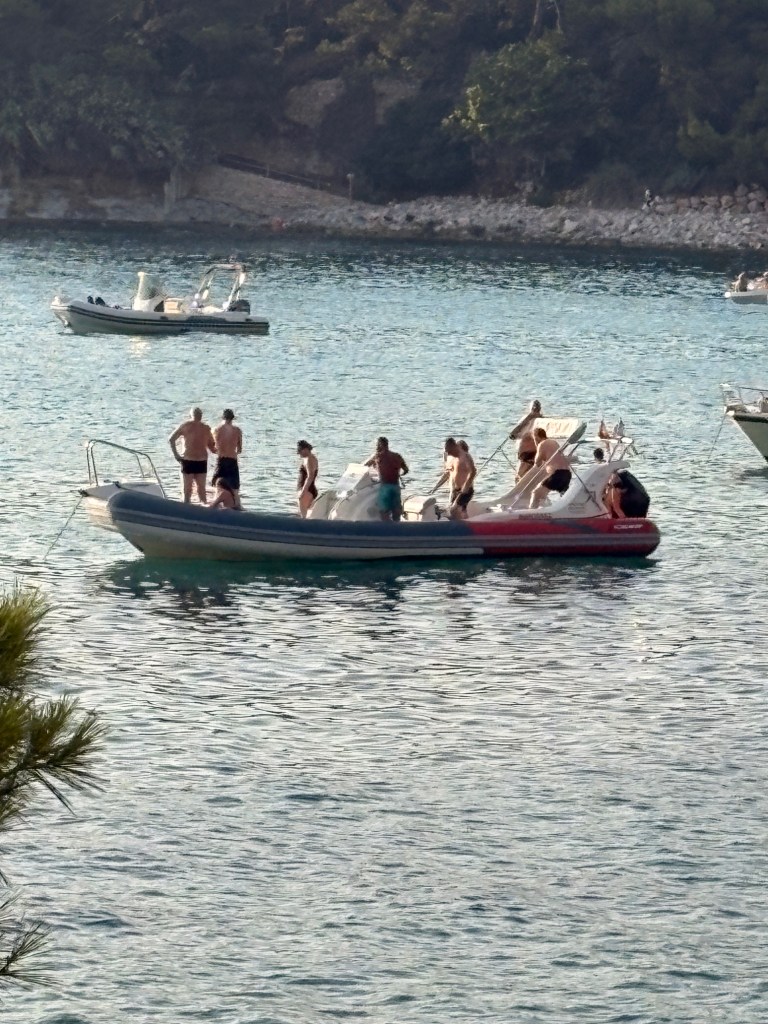
I stayed in a different hotel that night, and explored another beach. Boaters that evening brought memories of childhood summers on Frentress Lake and swimming there, too, in the morning, afternoon, and evening, families and friends gathering for beauty and pleasure. Barefoot amid roots, stones, and earth, the sea evaporating from my skin in the sun, I felt sparklingly alive.

A year here now, I can say that passing through here anew, living here, has reminded me who I am, was, and am becoming–an unexpected gathering.

The cat reunion stays with me. As does the sea. I close my eyes and feel its colors and freshness swirling in me. This week I return to work at The American College of the Mediterranean, as the Chief of Staff, a promotion. I’m so grateful.

I’ve read that confidence is innate and gets covered up, also that it is built with courage and patience. I wish I had clear-cut answers to the questions posed here. I just wanted to tell you about the cat.

Thanks for your time and reading. I’m glad you’re here. Marianne

Authorless

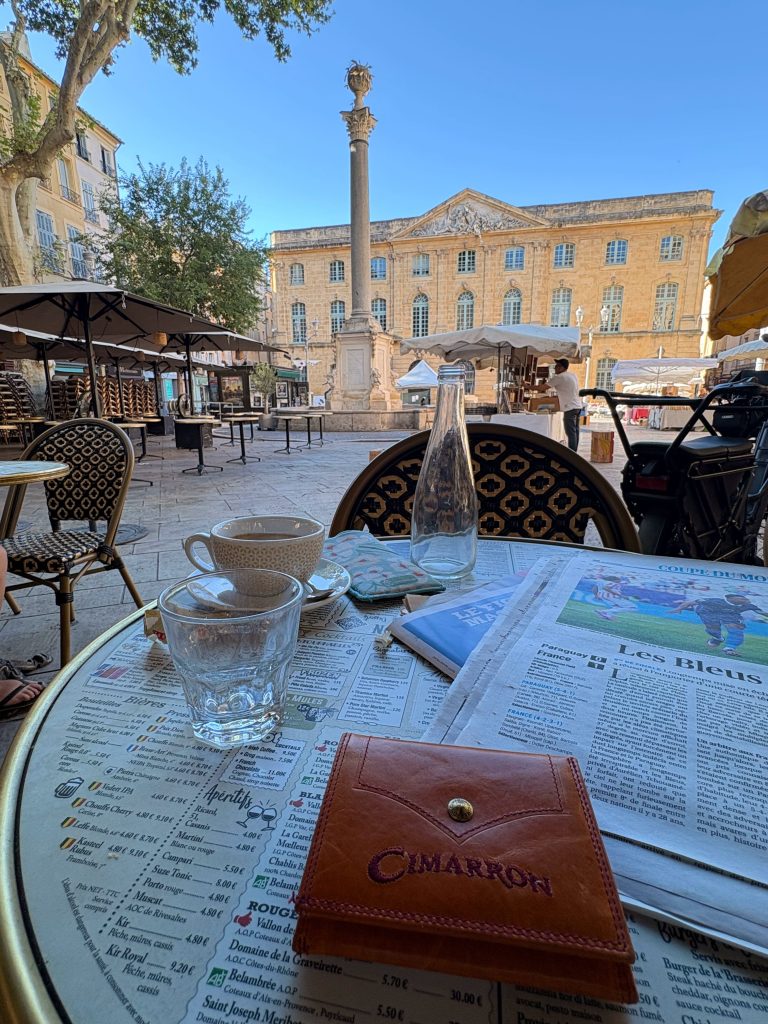
While I write by hand in a plaza in AIx-en-Provence, some sort of machine plumbing the information in cyberspace is the author of this exploration of my writing and who shares its style. Michelle and Kristin were new to me so I am getting to know them. Ocean, Joan, Claudia, and Patti have all been in my library.

Marianne Maili is an author and professor known for her lyrical, poetic, and uplifting writing style that blends memoir, fiction, and philosophical reflection.  Her work often explores universal themes such as home, love, loss, motherhood, and womanhood, frequently using a non-linear narrative structure that moves back and forth in time and place. 
Her notable works include:

  • I am home: A memoir-in-moments that examines the meaning of home and transforming grief into beauty, written in short, poetic chapters without proper names to center the work on universal human experiences. 
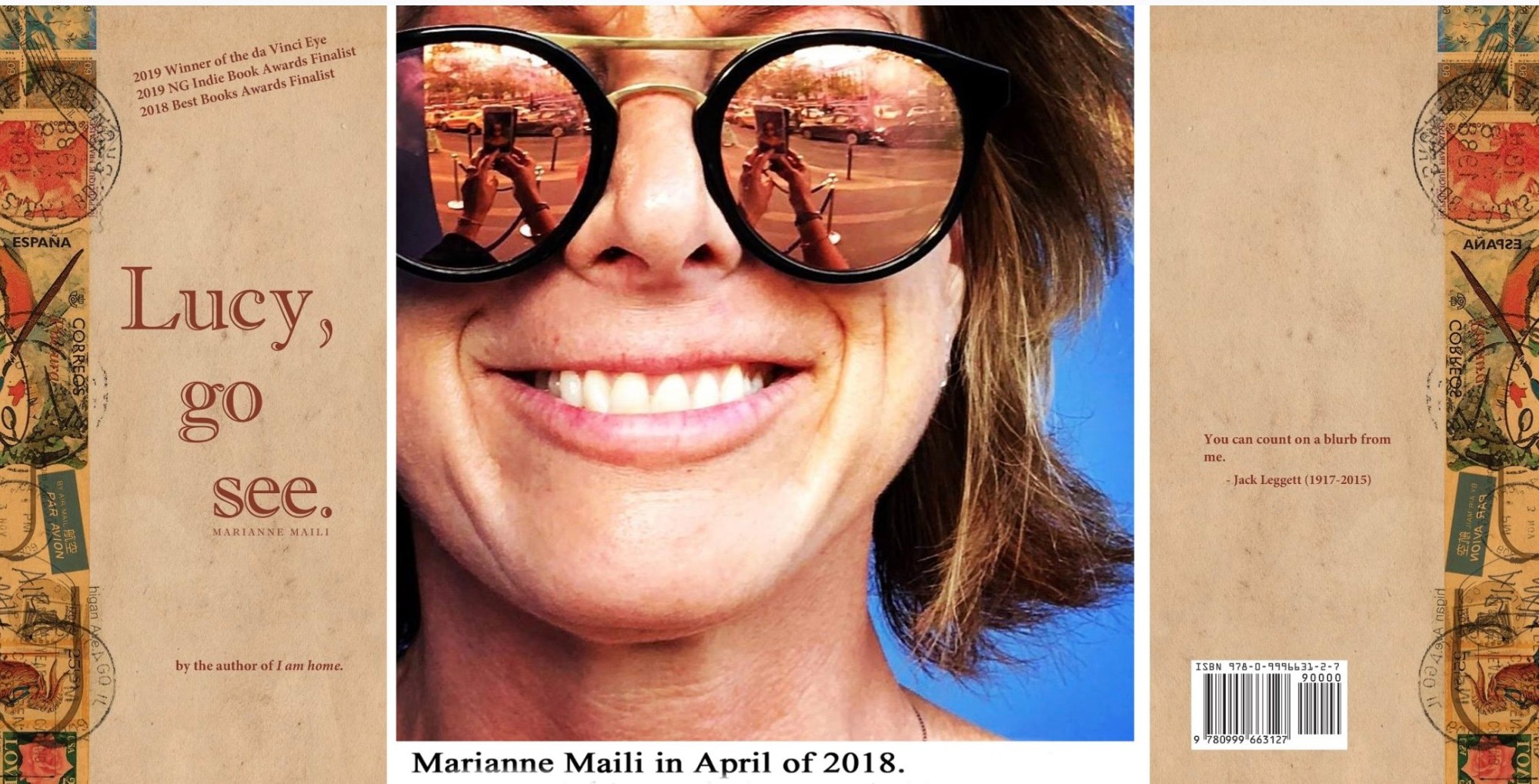
  • Lucy, go see: A novel following a young woman’s journey as an international model, exploring female sexual agency, independence, and the courage to follow one’s dreams. 

Readers and critics describe her prose as beautiful, inspiring, and insightful, noting her ability to balance profound topics with humor and elegance.  Maili’s writing is often characterized by its vivid imagery and its focus on finding beauty and connection amidst life’s challenges. 

Authors who share Marianne Maili’s lyrical, poetic, and fragmented style—particularly her use of memoir-in-moments and vivid imagery—include:
Ocean Vuong His memoir On Earth We’re Briefly Gorgeous is written as a series of poetic letters to a mother who cannot read. Like Maili, Vuong blends memoir and fiction with a focus on grief, family, and identity, using lush, metaphorical prose that prioritizes emotional resonance over linear chronology. 

Michelle Zauner In Crying in H Mart, Zauner employs a lyrical, sensory-driven narrative to explore grief and cultural identity.  Her writing, much like Maili’s, anchors profound emotional themes in specific, tangible details (particularly food and memory), creating a poetic meditation on loss and belonging. 

Joan Didion Specifically in The White Album, Didion utilizes a fragmentary structure similar to Maili’s “memoir-in-moments.” She weaves together reportage, memory, and self-scrutiny in short, disjointed essays where the gaps and discontinuities themselves carry meaning, mirroring the non-linear flow of Maili’s work. 

Claudia Rankine Her work Citizen: An American Lyric blends personal experience, cultural observation, and visual imagery into a layered meditation.  Like Maili, Rankine moves through vignettes and uses a non-traditional narrative structure to explore themes of identity and belonging, balancing the personal with the universal.

Patti Smith Her National Book Award-winning memoir Just Kids is frequently described as a lyrical memoir. Smith’s prose is poetic and reflective, focusing on memory, art, and deep connection, capturing the essence of a time and place with the same elegance and emotional depth found in Maili’s writing. 

Kristin Hannah For the richly detailed and dramatic aspects of Maili’s storytelling, Hannah’s historical fiction (such as The Four Winds or The Nightingale) offers a similar lush, emotive style that balances hardship with beauty, though often within a more traditional narrative arc. 

Annie Ernaux and I in a similar vein

I began reading Annie Ernaux in the early aughts, and since have read all of her books. Reading her in French was like walking through a door I was unaware existed and doing it with a French person like no other I had known or met. Her honesty and observation inspired me. Her writing about her life–or her life-writing (as it now sometimes called, which makes me smile because what other kind of writing is there)–made me feel akin to her.

The other day while searching online for sites where I am home. is offered, I saw this screenshot below. Imagine how I felt when seeing I am home. above a line-up of Annie Ernaux’s covers, and above them, a message telling the viewer that folks who shopped for I am home., also shopped for

her books. This encouraged and heartened me to keep on keepin’ on.

I wrote to her once, way back when, and she answered, and I still have that cherished letter. Seeing her awarded the Nobel in 2022 was deeply moving and quietly thrilling, this recognition of her work told me that the world was changing.

Making art of life has always been my aim–on and off the page. It’s an honor to see my work on the same page as hers. Our work could be called kin.

Thank you for reading,

Marianne
Lucy and The Epstein Files

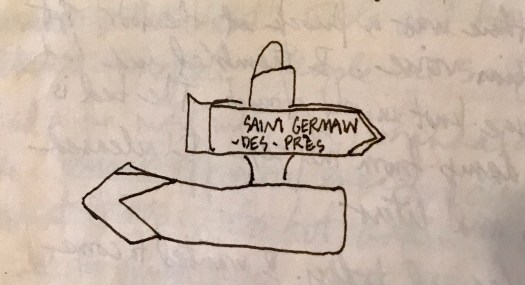
Saint-Germain-des-Prés

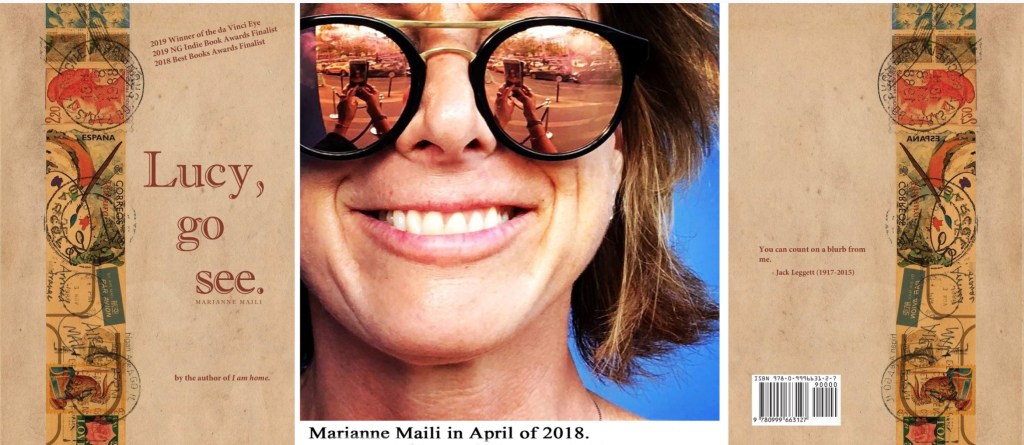
I can write this now that these men are dead and cannot sue me for libel. Lucy Pilgrim would want me to, and would want you to know the despicable agents in her story and my first novel, Lucy, go see., were real-life characters whose names are in the Epstein Files. I used some of my own experiences in the modeling world in the novel, and Lucy would also like it that I ask you to scoundrel-hunt these characters in the pages of Lucy, go see.

I often remember when I heard the news that Jean-Luc Brunel had hung himself in his prison cell in Paris, and how strange it felt. I had been close to this man for some hours in the summer of 1988, a morning and an afternoon, a sort of overnight time, a lunch, a couple of dinners. It was and still is weird to remember the proximity and humanness of him, his elf-like expressions, agility, and hyperactivity, and then to imagine this slight, arrogant trickster preparing to hang himself, then prison guards finding his limp body dangling in dank darkness. It had been weird, too, over a year earlier, when I read he had been arrested in an airport. I imagined his knee-jerking movements and nonchalant expression as he was approached and taken away. I could see him nervously lying, smiling, twitching, his wounded-animal blood-shot eyes pleading. He was never a friend, yet I would call the time we spent together intimate, especially because he revealed a spark of his vulnerability to me during it. He was honestly despicable and that clarity was part of why I hung around for a while. I had a good hunch about what I was getting into when I agreed to go to his home, and I went as a curious writer gathering fodder because I wanted to see how far he would go. I think he sensed with me his usual shtick might require something more and maybe he was too tired for that and happy for the company. Maybe he hadn’t started slipping Mickies in drinks yet, or was out of them. It was August in Paris and perhaps it would never have happened if there had been more unoccupied teenaged models in town. Instead, he would get nowhere with me, other than at least avoiding what he proclaimed he loathed most–being alone. In the end, it was a shame-filled experience for both of us, for different reasons, or maybe the same, depending on how you look at it.

I hesitate to write more though there is so much I’d like to say about sexual abuse in our society. John Casablancas also comes to mind. Another agent, also deceased, also fictionalized in Lucy, go see., also unsurprisingly in those files. The one who said straight to my face when I was 19, “You are already old for this business. I like to get girls when they are fifteen, before they have a mind of their own.” It is also uncanny to think of the moments I spent with him and how his interest in me moved my life toward places I wanted to go, and how my subsequent disinterest in him moved it again, in yet other interesting directions.

And another, whose name I try to recall, who is possibly still alive, also in Lucy, go see., and whose name I also would be unsurprised to see in those files.

Oh, the trouble Lucy got into and out of!

Enough for now. This morning I went to see the film, Nuremberg, (go!) and am thinking about Dr. Douglas Kelley, the psychiatrist who interviewed the war criminals, and his disturbing revelations that they were not monsters, they were humans, shaped by extreme circumstances, and this line: “The only clue to what man can do is what man has done,” attributed to British philosopher R.G. Collingwood, 

I am thinking about it because of what I wrote in the first paragraph above, and how I was able to feel sad and sorry for someone even while knowing he has done despicable things which I in no way condone. I knew some of those things then, from what he told me, and what I could imagine, but later learned the extent of the network and the depravity.

I am following the news and praying for justice, for accountability. Over all, I’m praying for abuse to stop, praying for people to see it and call it what it is.

Thanks, as always, for reading.

Marianne

INSIDE THE CREATION OF LUCY, GO SEE.

Thanks again to Christal Ann Rice Cooper for featuring me in her “Inside the Emotion of Fiction” series. Click below to read about all the places where the novel was written and to enjoy more insider info.

Dear Marianne,*

I am very pleased to hear that you have found a home of whatever sort you choose, in the south of France and also an academic community at that–if you had planned it, it possibly never would have happened. As a wonderer wanderer and experience junkie, I applaud.

Given the array of options you have geographically, I cannot help but think about wanderers in the most positive way. I have been privileged late in life to explore and to journey in ways I never could have before. I have thought about your growing work for a long time from that perspective and the extraordinary search for home that you have. The structure of your work as a short essay–or singular diary–like notes – lends itself to self-description.

My traveling days are over except in the alternate reality of sharing how talented women lead independent lives, this is of enormous interest. It is an art form.

There are many elements in your writing that are interesting to me–a speaker, editor, and writer who does all that in order to avoid writing itself. Your work strikes me for its structure, it is stream-of-consciousness, and it’s very in the moment in present or past.

It is never clear to a wandering spirit why we wander, but it certainly feels good to share with someone who understands the pluses and minuses of being a risk-taker. I have just had a fantasy of putting together the handful of wonderful women I would love to meet with laughter, joy, and acceptance, and a very inappropriate life. It seems to me that you have done a remarkable job of getting to this point where not just the actions of your wanderlust are elegant, as the wanderer’s diary permits. Shared laughter is an art and a gift.

*I recently re-entered correspondence with this generous reader in her 93rd year. I feel fortunate as our correspondence is opening places in me, doors I realize I closed, or wells I have forgotten to tap. Anyone who knows me knows I love letters, a rare art these days, and this correspondence is happening through FB messenger as the writer of this letter has dealt with some health issues recently so she is speaking into the computer and FB is transcribing her words. I am unsure if FB transcribes it all as it was said sometimes and I am so grateful and moved when I receive words at home in Aix-en-Provence at any time of day on a screen, from a fan across the continent and the ocean, sitting in her Connecticut home talking into her computer.

One last note – another film recommendation–Coutures. It’s beautifully sewn together and a story about wounds, relationships, risk-takers, and women helping each other set in the world of film and fashion. (I thought about dear Lucy Pilgrim a lot while I watched and it made me want to see Lucy, go see. on screen.) See it when you can. I was fortunate to attend a pre-screening here in Aix, with the inspiring screenwriter and director Alice Winocour and the fascinating actress Anyier Anei (who made her debut with this movie) answering questions afterward and sharing the making-of. Truly marvelous.

Living, aging; what are you doing?

I am tired of seeing and hearing the word aging.

Living, people, that is what we are here to do.

I am living in France since late August after 875 fabulous days of living in Spain.

I came here to represent the Office of the President at The American College of the Mediterranean and I am glad I did.

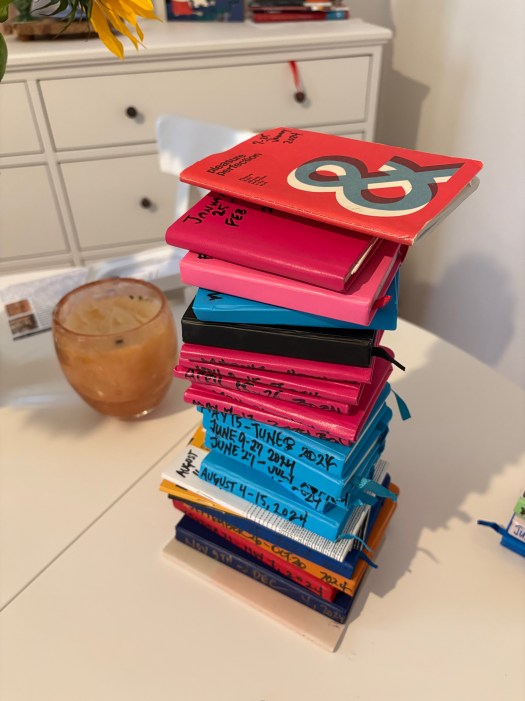
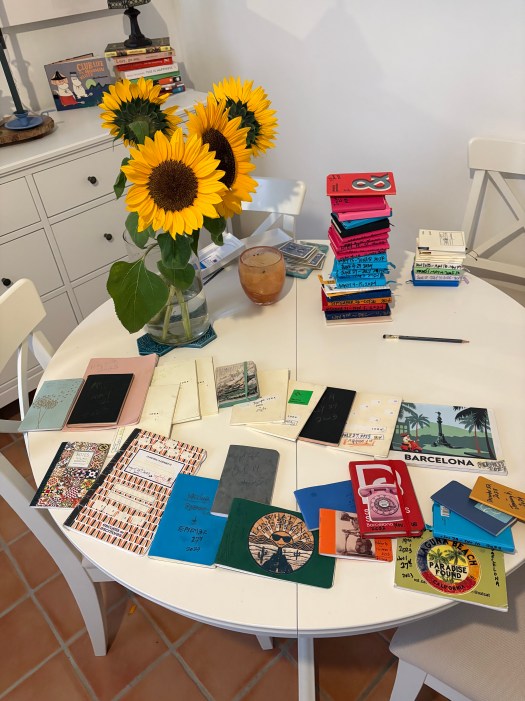
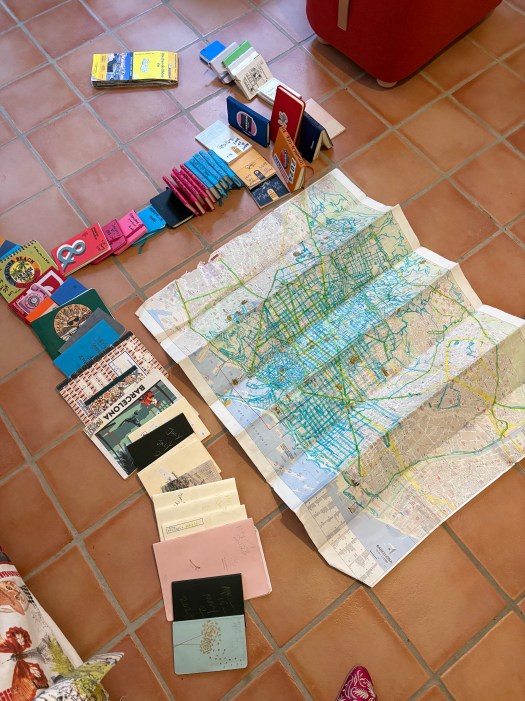
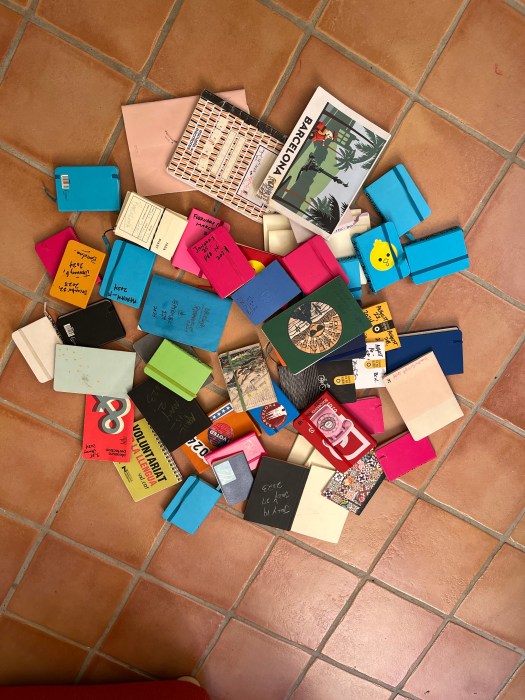
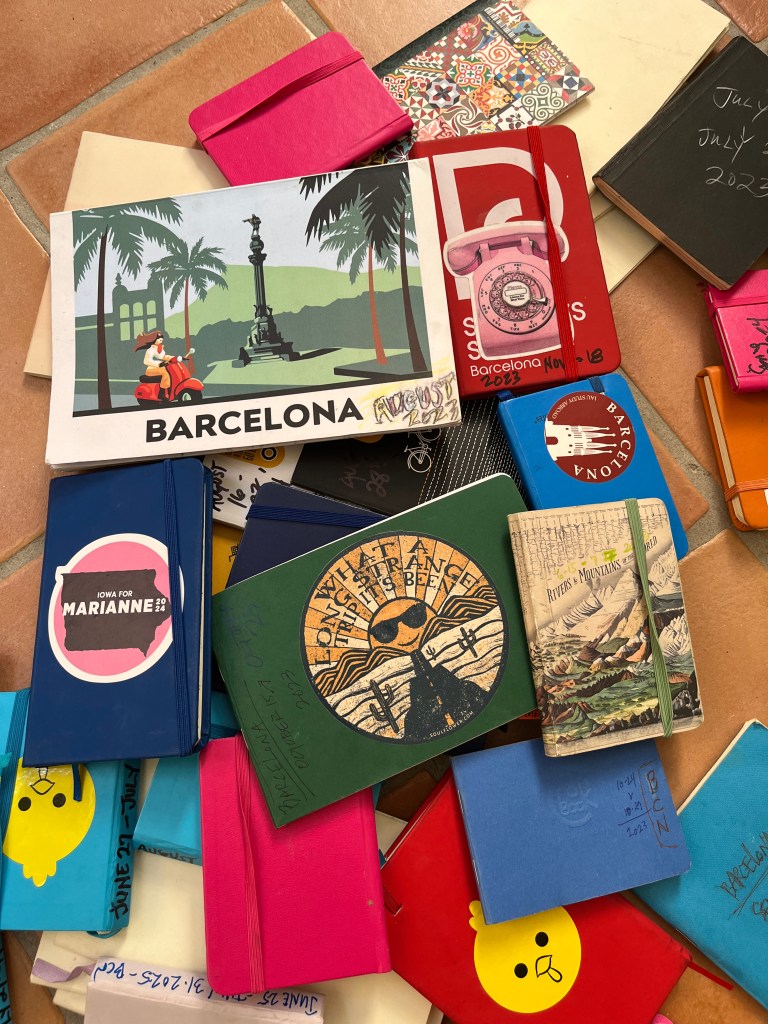
Some days ago, I began reading the notebooks in which I wrote and drew during the Barcelona days. It’s wonderful to be inspired by that Marianne who dared to return to Spain without knowing how it would all work out.

Aix is inspiring me, too.

I popped in to say HI – (my new abbreviation for Human Intelligence).

Since I began working at ACM-IAU aka The American College of the Mediterranean-Institute d’Universités Americains, life has been filled with newness and learning. Less posting, too.

I love to put together images to share with you, and that takes time, and today I will post with less images than I would like, because I want to post something.

Still writing.

Still heartened to see Lucy, go see. and I am home. moving in the world, being read, talked about. Still dreaming about translations and films.

Repeating the phrase Je veux encore jouer daily.

Sketching, snapshotting, looking at it all.

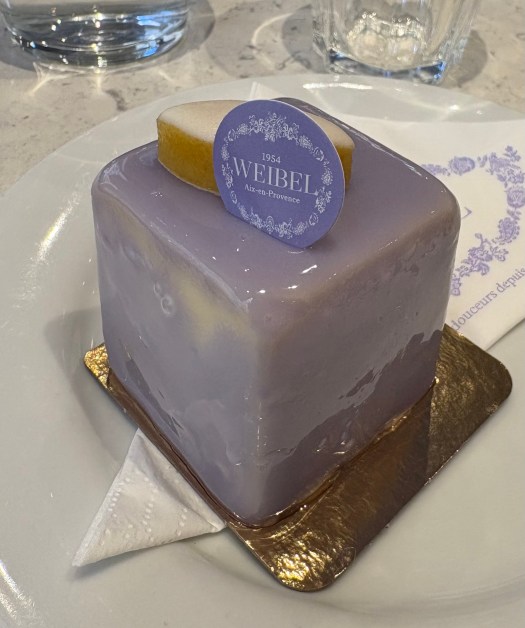
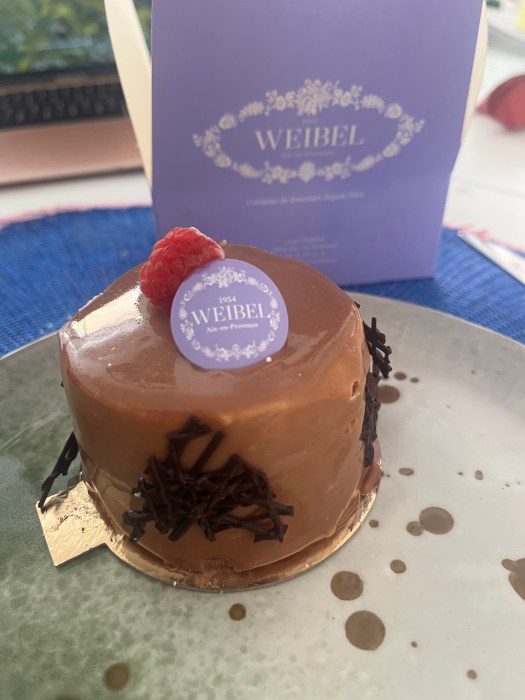
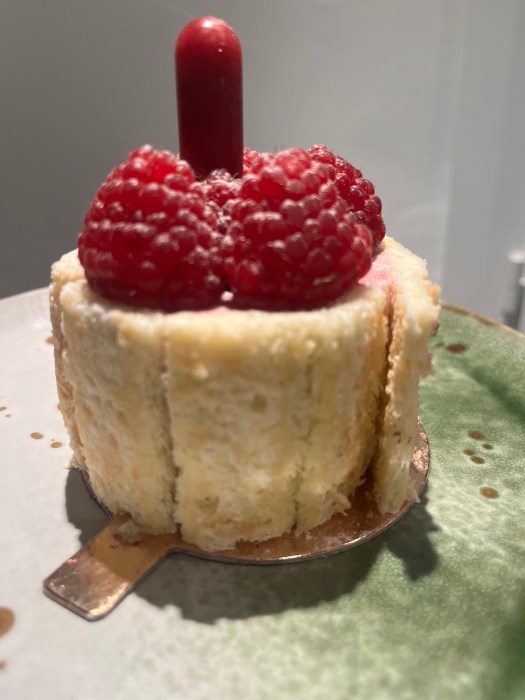
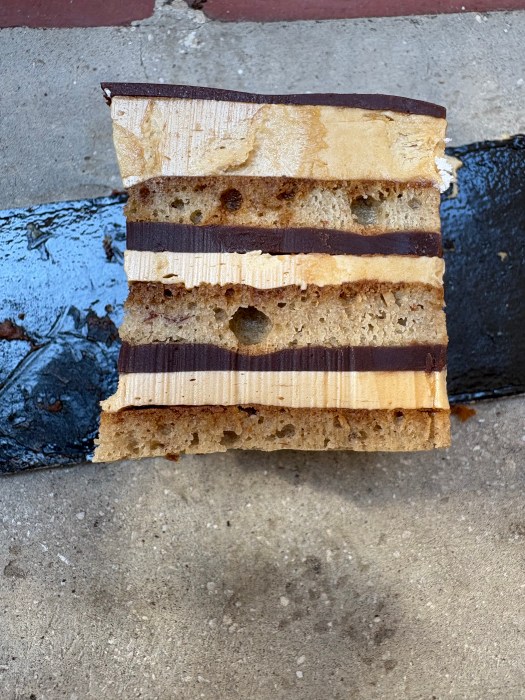
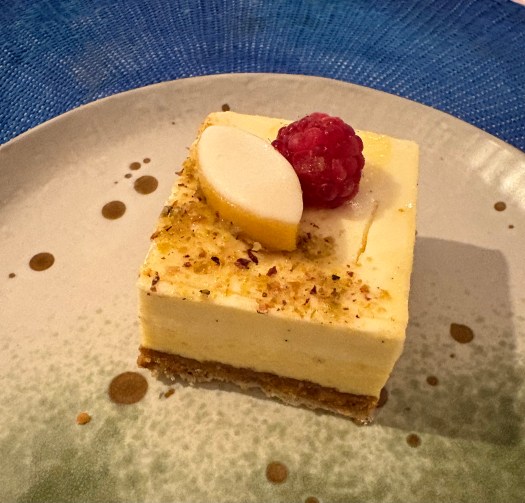
Also working on the delicious project of tasting and ranking French desserts.

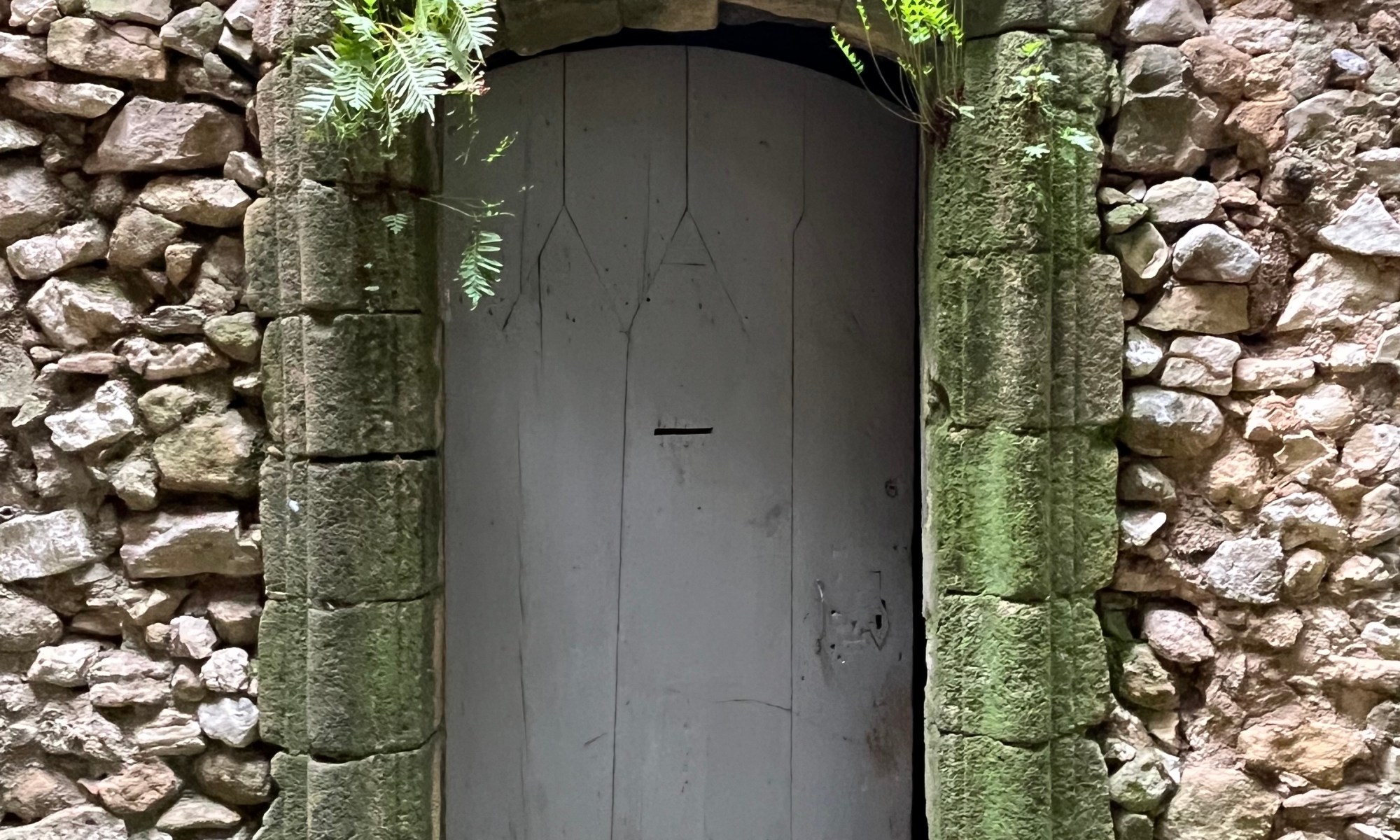
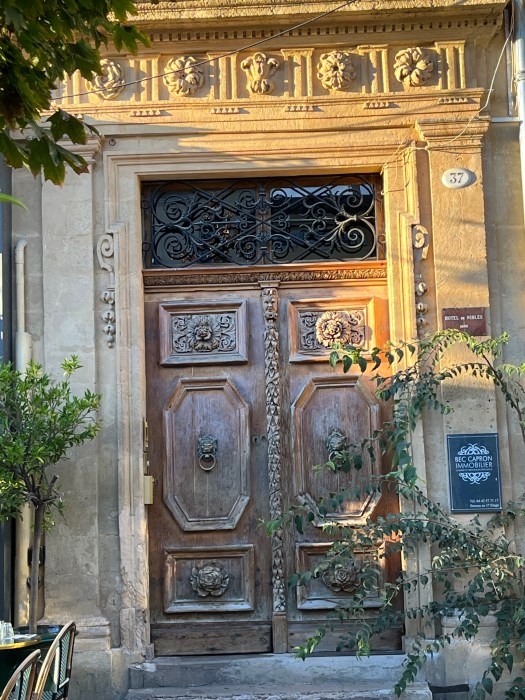
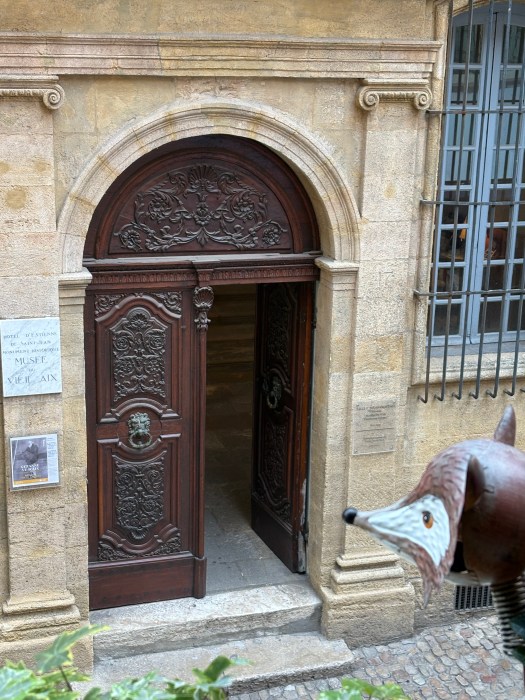
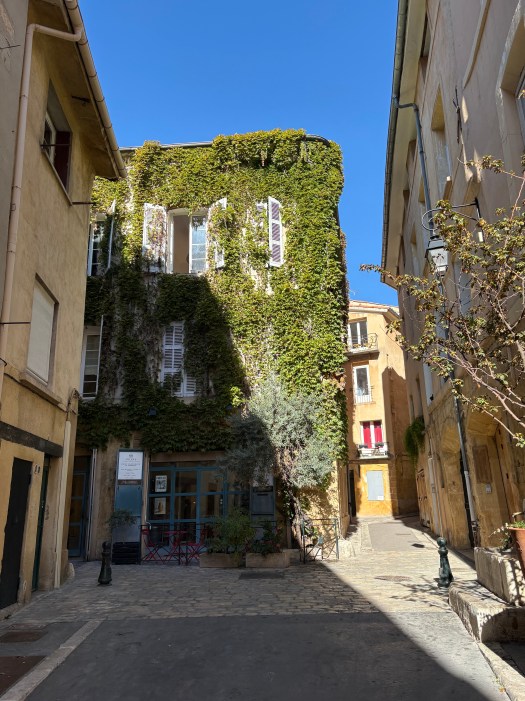
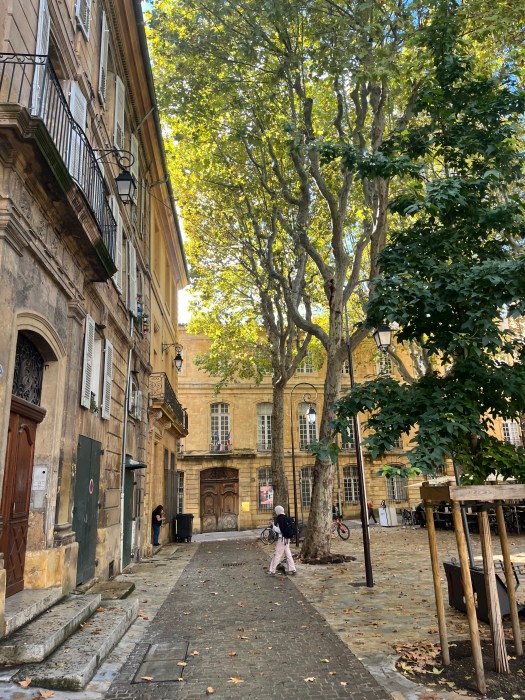
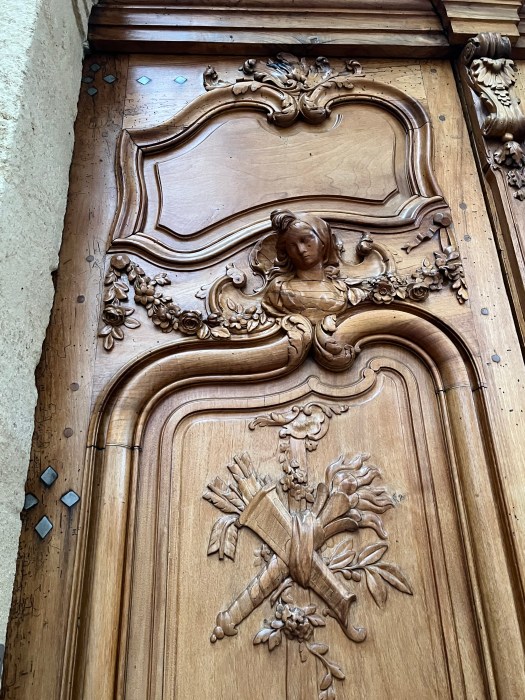
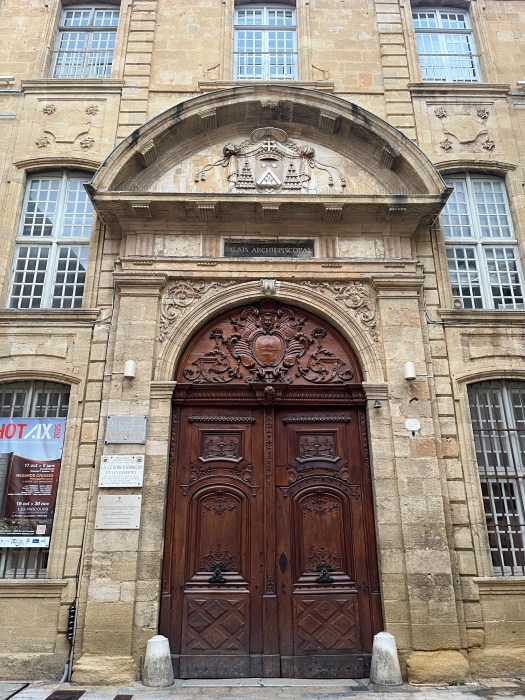
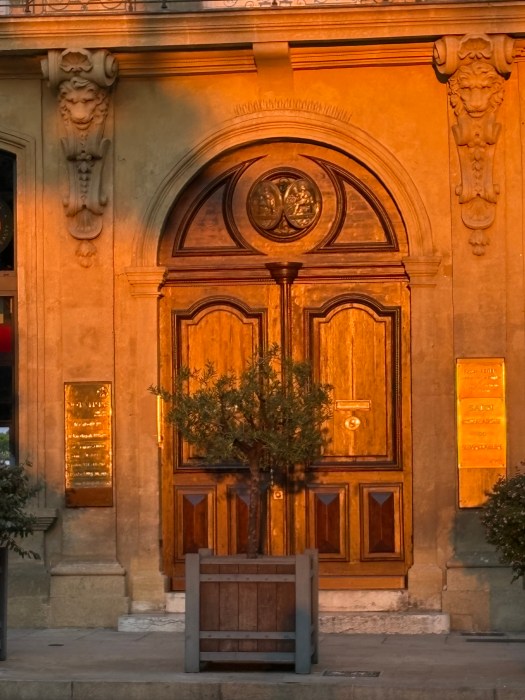
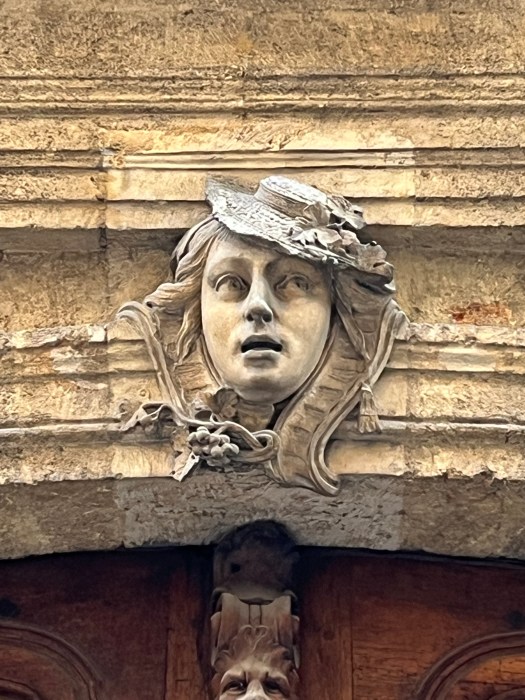
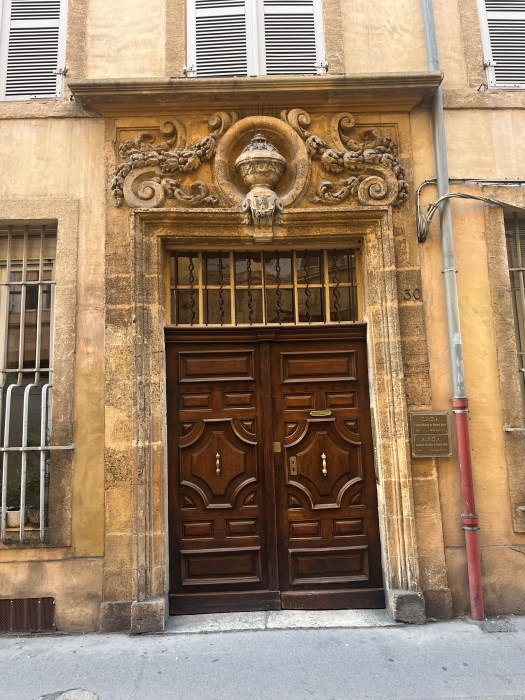
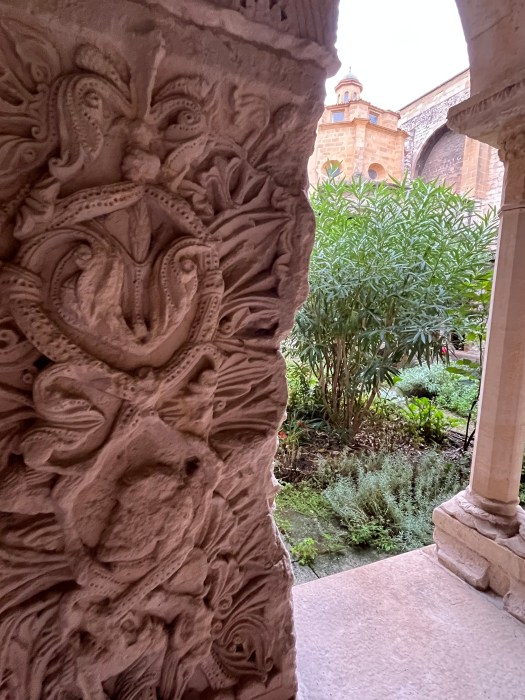
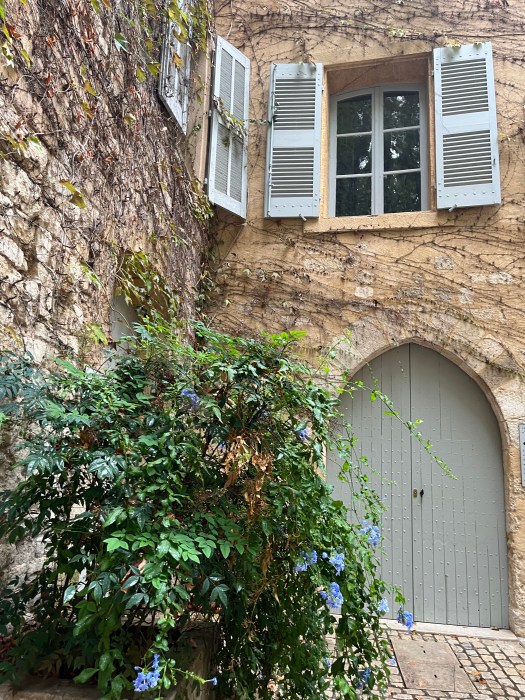
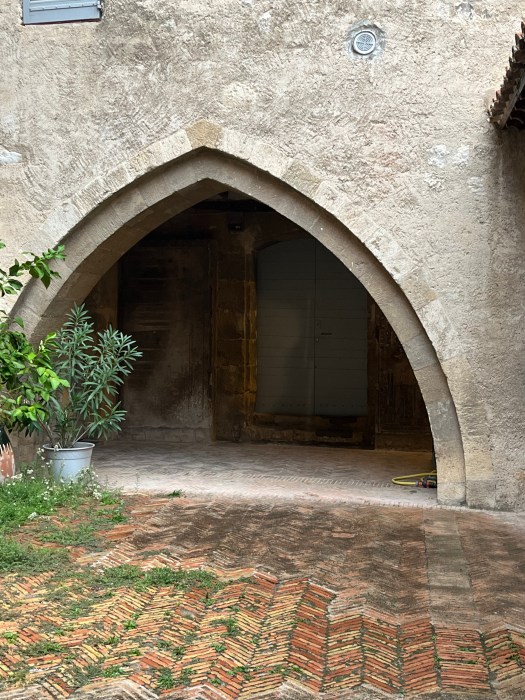
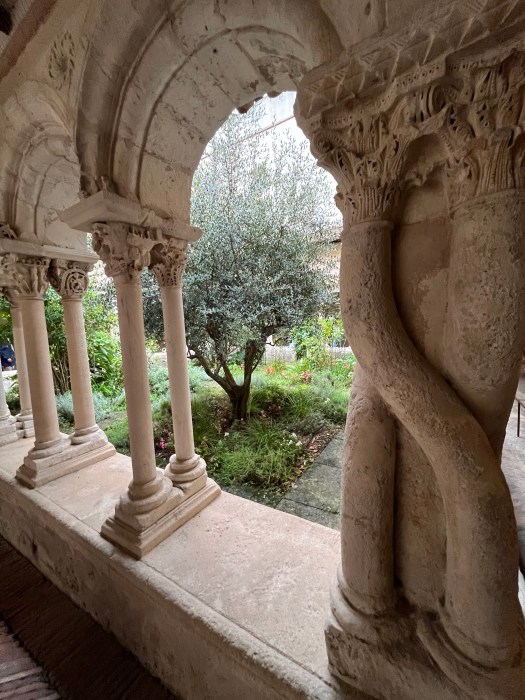
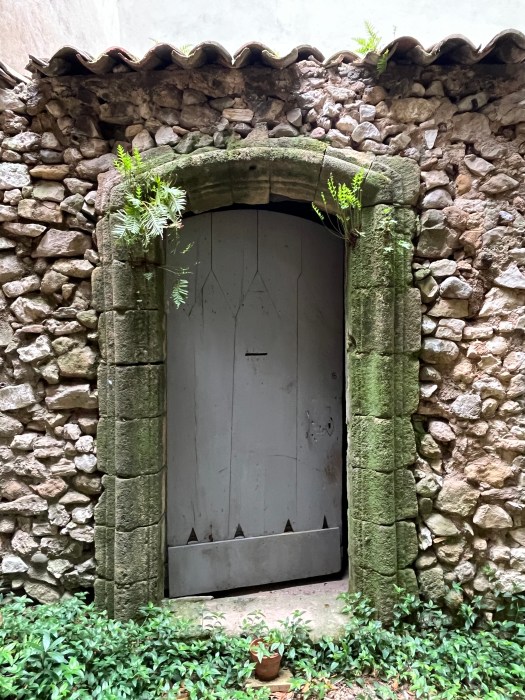
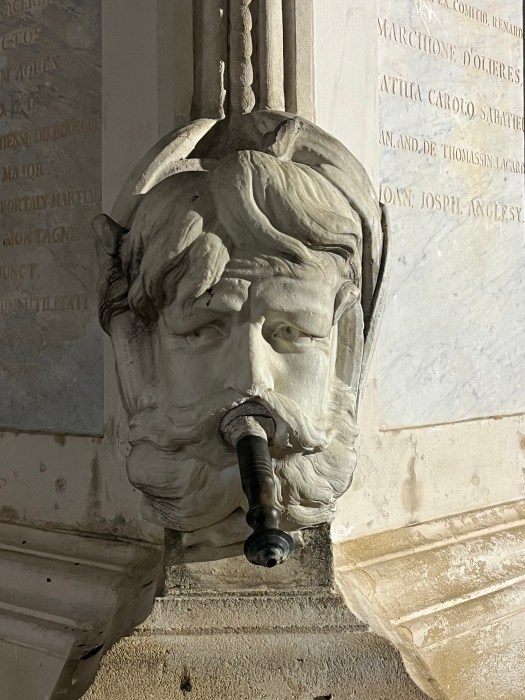
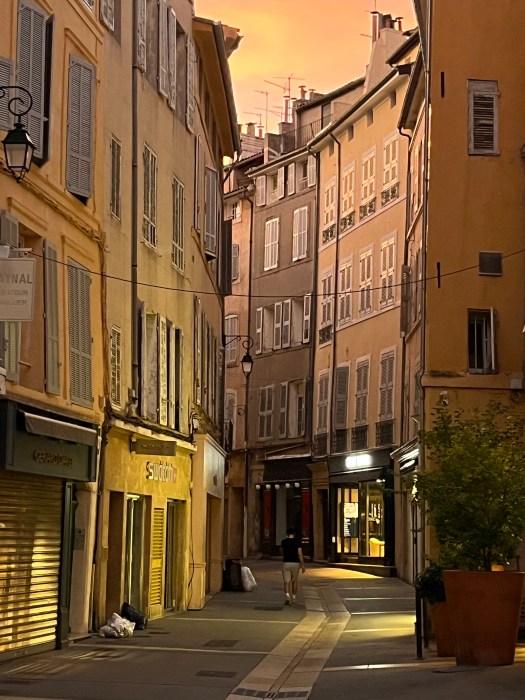
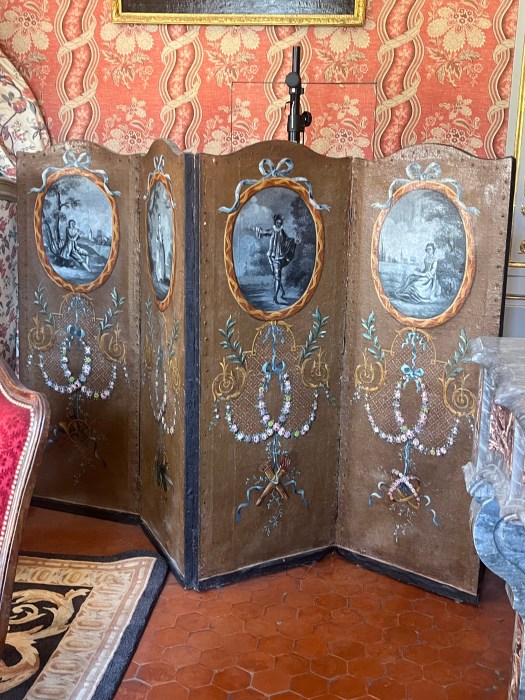
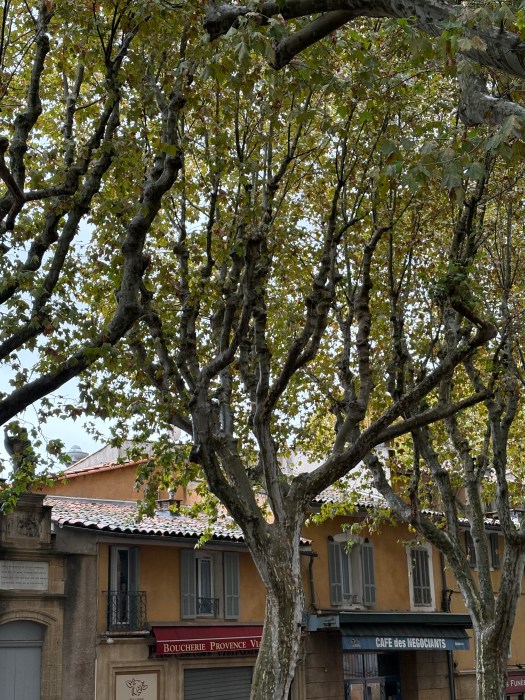
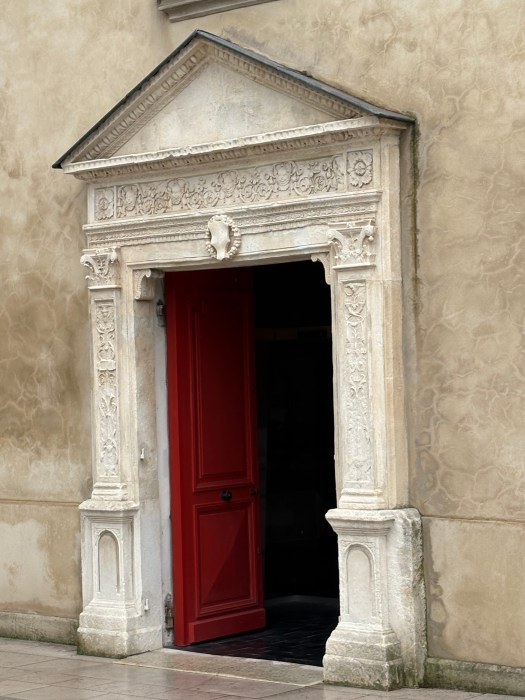
Doors, stone heads, shafts and splashes of light. Virgin vines (les vignes vierges have a different translation, but I like this one). I enjoy these things and so much more in Aix.

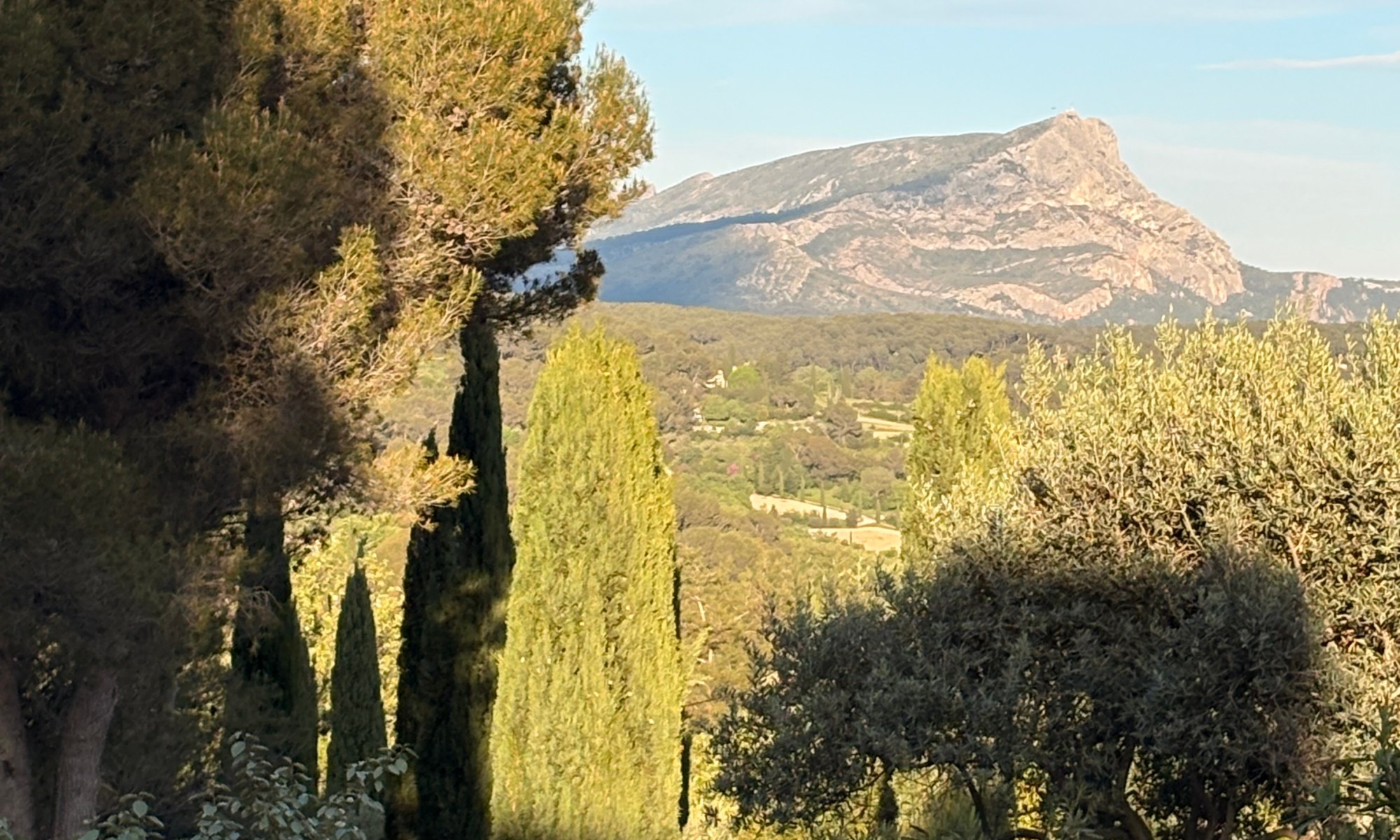
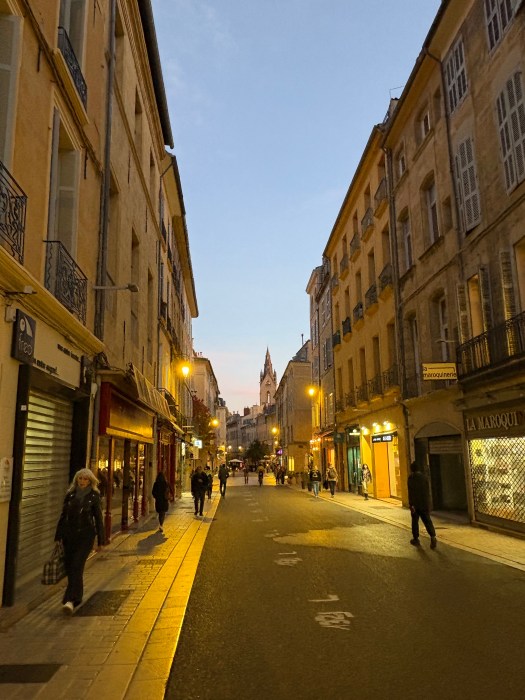
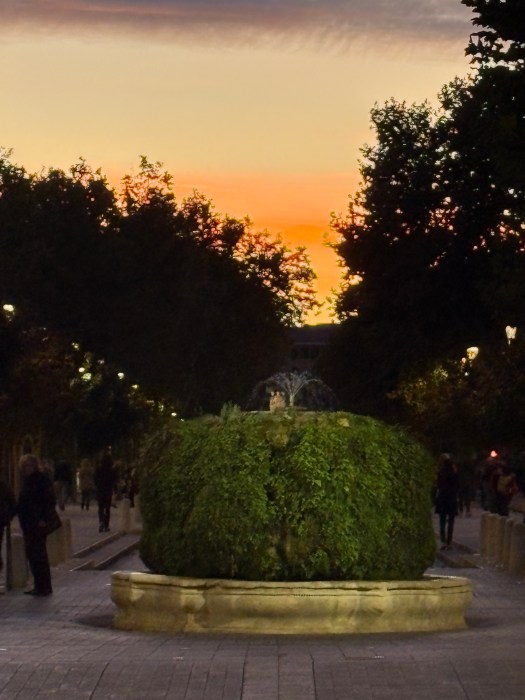
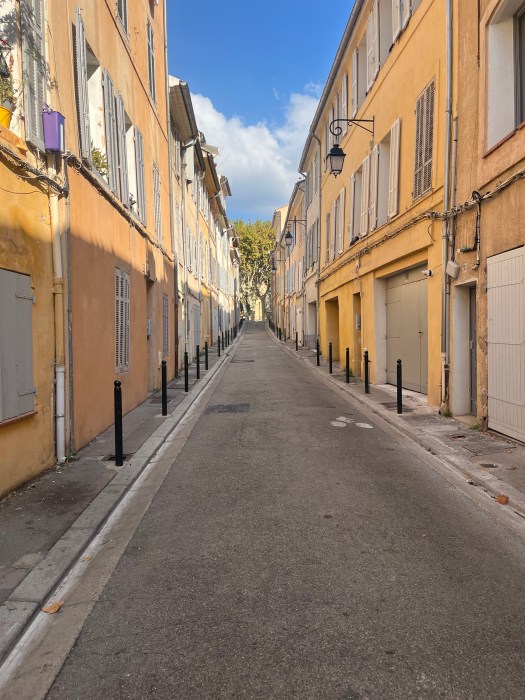
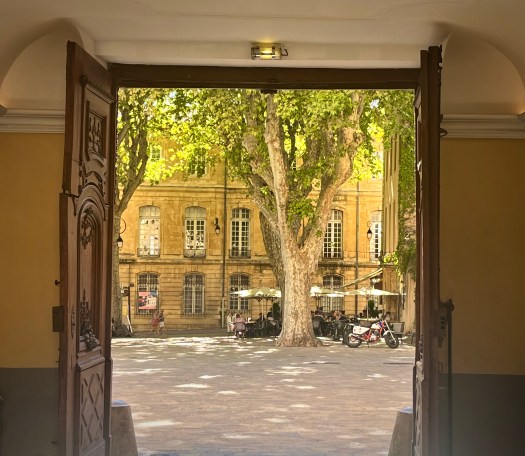
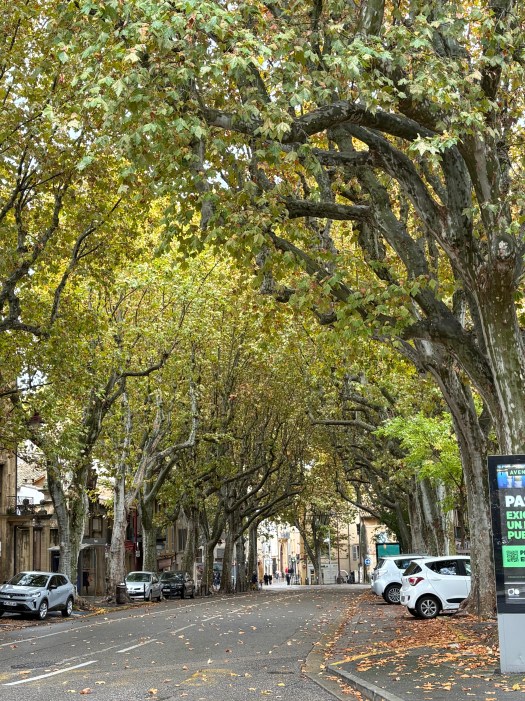
It’s a curlicue place. Water running everywhere under the surface, making man-made structures lopsided, floors curvy. Immense plane trees, pines, cypress, walnuts, chestnuts. Ochre stone, a city chock-full of centuries of stories. Heads were chopped off here in a beautiful plaza in front of a church and stone heads adorn intricately carved wooden majestic doors. Places fit for royalty, archbishops.

Strange note to end on but there it is, thought about constantly as I walk through the city-center’s labrynth of wonder.

Here’s a slide show for you, quickly clicked together. A smattering. I hope you enjoy it. Thanks for your attention. Love, Marianne
A Serendipitous Saturday in Barcelona

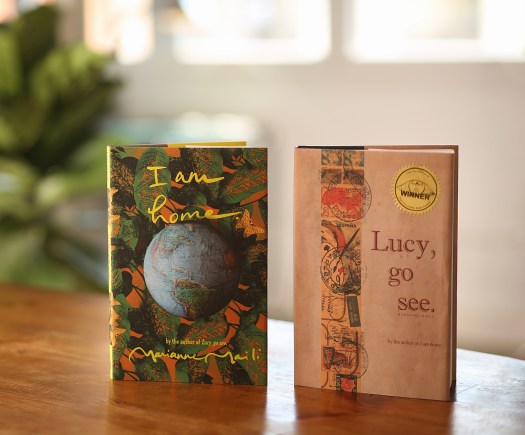
Some days are like this: You are enjoying the last day of a dear friend’s visit, a friend who is also a fan and supporter of your writing, as you are of hers. You hesitate to walk her by the wonderful bookshop backstory to say, This is where I did that event last fall – your hesitation is because there are so many other things to show her in fabulous Barcelona, but you go anyway. Your son is with you. C’mon, Mom, he says, as your friend says, I can’t believe you would even think I would not want to go, as you all walk in the bookstore and scatter, enjoying it. You look around for your books and can’t find them and you ask the young woman at the desk if there are any books by — and you say your name but don’t tell her it’s your name and she looks it up and she says yes, and takes you to the section and fingers through it like playing spines like a piano and is unable to find it so you assume it is sold out and she says, wait. Then another woman comes from another direction and says, here, yes, we have a copy left, and you thank her and ask where it was and she says up front on the table of writers we highlight, and then she says but you are the author, aren’t you? and you smile and say yes and she tells you that she organized the event, the conversation you had with a fabulous librarian and that she was disappointed that she couldn’t be there. She tells you this while you notice and smile at the company of authors your book is keeping. Your friend sees your book and wants to photograph you in front of it. The woman who handed it to you wants to join in and post it on social media, she says. You offer to sign it, afterwards, and she rushes back with a signed copies sign. A woman you recognized from afar when you entered and have been meaning to say hello to comes from the back of the shop and greets you and says, you wrote a book? and you say, yes, two. You introduce her to your friend as this woman picks up the copy of I am home. and tucks it between arm and chest snugly. You substitute taught at the school where this woman teaches Spanish a year ago and this is the first time you have seen her in almost a year. She was so present and supportive, you tell your friend. How is that she didn’t know about your books? your friend asks and you say, what am I supposed to do? go around telling people about my books when I first meet them?
Your friend rests her palm on your back as you leave, flanked by her and your son. That was the perfect ending to my fantastic stay. It was so exciting and inspiring to see your book in a bookstore. And then to watch you sign it and to watch it fly off the shelf! You might start telling people around here about your books and where they can get them. Just sayin’.

Lucy, go see. I am home. backstory bookshop.